
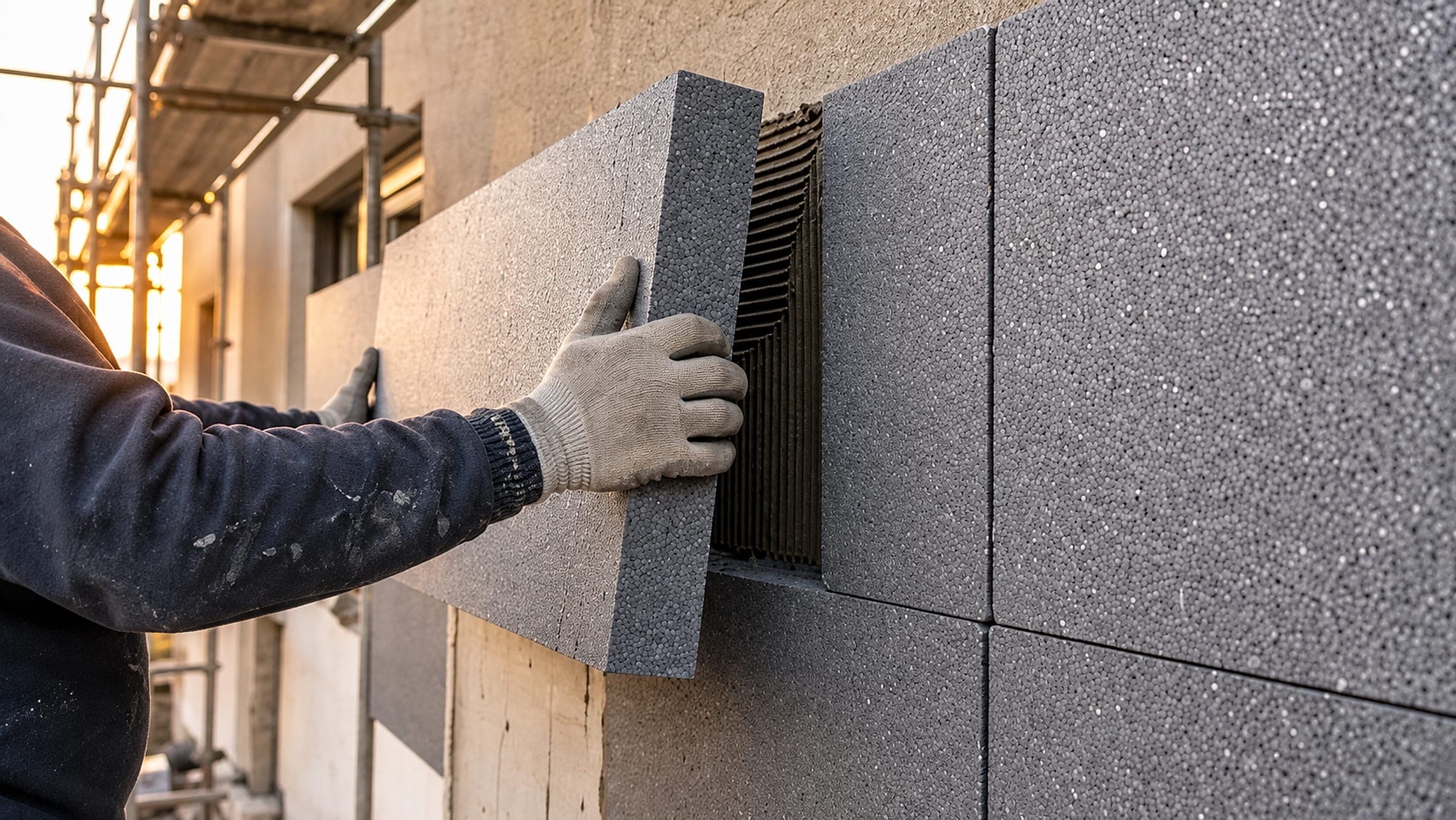
Facade insulation
Facade insulation, neatly finished
We insulate your facade with EPS boards and finish it in the colour and texture you choose. Request a quote and get a price indication within 1 working day.
- 20+ years' experience
- In finishing work.
- Fixed price
- After a free survey, with starting week.
- Subsidy-ready
- Thick enough for the Dutch ISDE scheme as standard.
- 5-year guarantee
- On fixing, adhesion and watertightness.
What would you like to know?
Our work
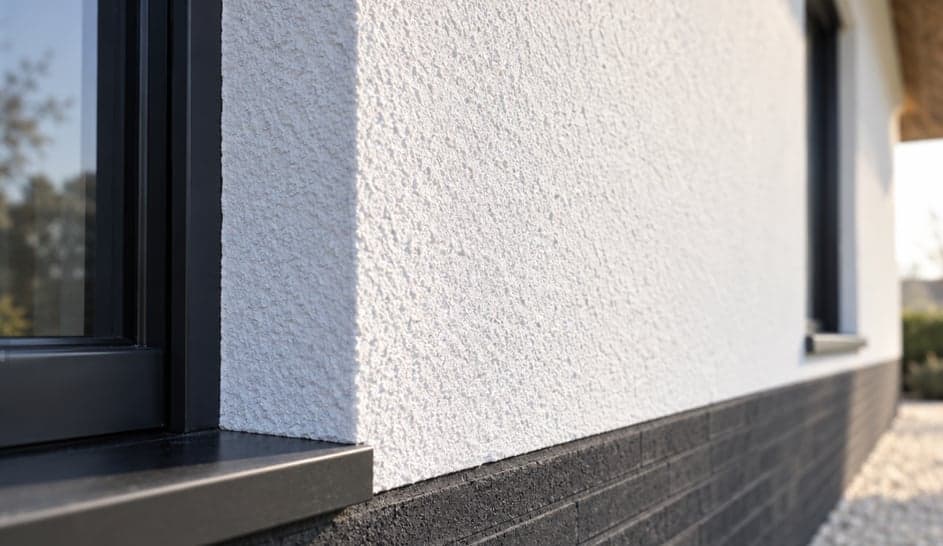
“We had our holiday home fully insulated and then finished with a light textured render. It looks great, and the work was done carefully throughout. Very happy with the result!”
Is facade insulation right for your home?
The year your home was built already says a lot about how the facade is put together. We always check on site during the survey, but this is where we start.
| Year built | What you usually have | Our advice |
|---|---|---|
| Before 1920 | Solid walls, no cavity | Insulating from the outside is the best way to insulate your facade. |
| 1920 to 1974 | A cavity, not insulated when built | If the cavity is empty and the facade is sound, start with cavity wall insulation. If the facade needs work anyway, or you want to go further, then external insulation. |
| 1975 to 1991 | A cavity with a thin layer of insulation | External insulation if you want a heat pump, or if the facade is being tackled anyway. |
| From 1992 | A reasonably insulated cavity | Rarely needed for energy saving. It is worthwhile if you want to renew the facade, or give an extension the same exterior. |
A good choice if
- Your facade needs maintenance. Porous bricks, poor pointing, hairline cracks or an extension in a different brick. Instead of repairing, you get a new facade in one go that insulates as well.
- Rain drives through your facade. The new outer layer keeps the water out.
- Your cavity cannot be filled. Too narrow, full of mortar debris, or already filled, but not enough.
- You do not want to give anything up inside. No lining walls, no lost centimetres, no demolition work indoors.
- Your window frames are due for replacement anyway. The new frame can then sit further out, in line with the insulation. No cold edge around the window, and shallower window sills.
Better to do something else first if
- The damp is rising from below or coming from a leaking gutter. That cause has to go first, otherwise you lock the damp into the wall.
- Your facade has cracks from subsidence or rusting wall ties. That has to be investigated and repaired first. Otherwise the cracks come back in your new facade.
- Your home is a listed building or stands in a protected townscape. Stricter rules then apply. Check with your municipality first about the permit.
Three things we check at your home
Is there room?
Your facade becomes 13 to 18 centimetres thicker. We check whether the roof edge covers that, whether the insulation stays within your property boundary and how we join on to the neighbours' facade.
Is your facade ready?
We check whether the surface is firm, clean and dry enough, and what is fixed to the facade, such as downpipes, cables and lights. That decides how we start.
Is anything living in your cavity?
Bats or birds can live in a cavity that has not been insulated yet. They are protected. Before we close up a facade like that, it has to be checked first.
Not sure whether facade insulation suits your home? Get in touch for advice, ideally with the year it was built and photos of your facades. We will tell you honestly what makes sense, even if it is not work we do.
Costs
What does facade insulation cost?
The price depends on three things: the m² of facade, the insulation thickness, and the number of window frames and corners. Request a quote and you'll have a price indication within 1 working day. We set the fixed price after a free survey, where we assess the surface and the junctions.
This is always included
- Scaffolding and covering
- EPS boards, bonded and fixed
- Reinforcement with glass-fibre mesh
- Finish coat in your colour
- Base rail and plinth
- Final clean
How much VAT?
For homes in the Netherlands: if your home is more than 2 years old you pay 9% on the labour and finish coat and 21% on the insulation material. The quote shows it per item. For a new-build under 2 years old and for commercial property it is 21%. For projects outside the Netherlands we go through the VAT with you beforehand.
What you get back: the ISDE subsidy (Netherlands)
- €20.25 per m² of facade, for at least 10 and at most 170 m².
- Double that, €40.50 per m², with a second measure within 24 months.
- The insulation has to reach at least Rd 3.5. We do that as standard.
- Your home is in the Netherlands, was built before 2019 and you live in it yourself.
- You apply yourself to the Dutch RVO, within 24 months of the work.
What we arrange for your application
You apply for the ISDE to the RVO once the work is finished. We make sure you have everything: the reporting code, the m², the thickness, the insulation value and the type of insulation are in the quote and on the invoice, and during the work we take a photo that clearly shows your home and the insulation. You add the proof of payment yourself. There is no ISDE for a holiday or second home, a new extension, an unheated conservatory or shed, or a garage.
Getting more from your subsidy
Many Dutch municipalities also have their own scheme, and sometimes you have to apply before the work starts. Not sure what is available to you, or the smartest order to do things in? Get in touch and we will set it out together.
Checked on 30 September 2026.
What will your facade look like?
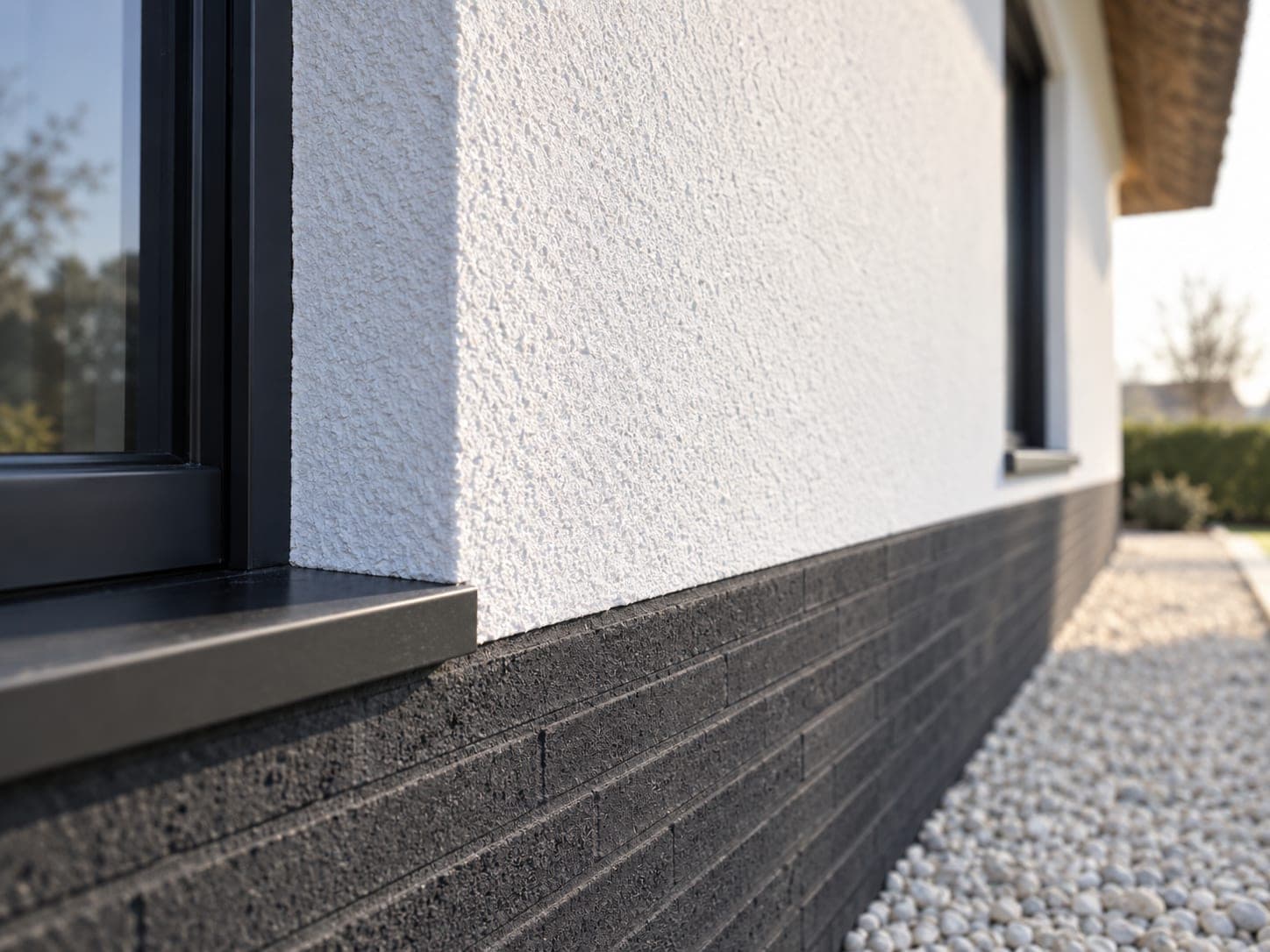
The finish coat determines how your home looks. You choose a colour and a texture: fine, coarser or smooth. A fine grain looks understated and modern, a coarser grain gives more relief. White and light shades make a house look bigger and fresher, while a dark plinth grounds it. One limit: very dark colours get so hot in the sun that the render can crack. If you want anthracite or black, we'll look together at what's possible.
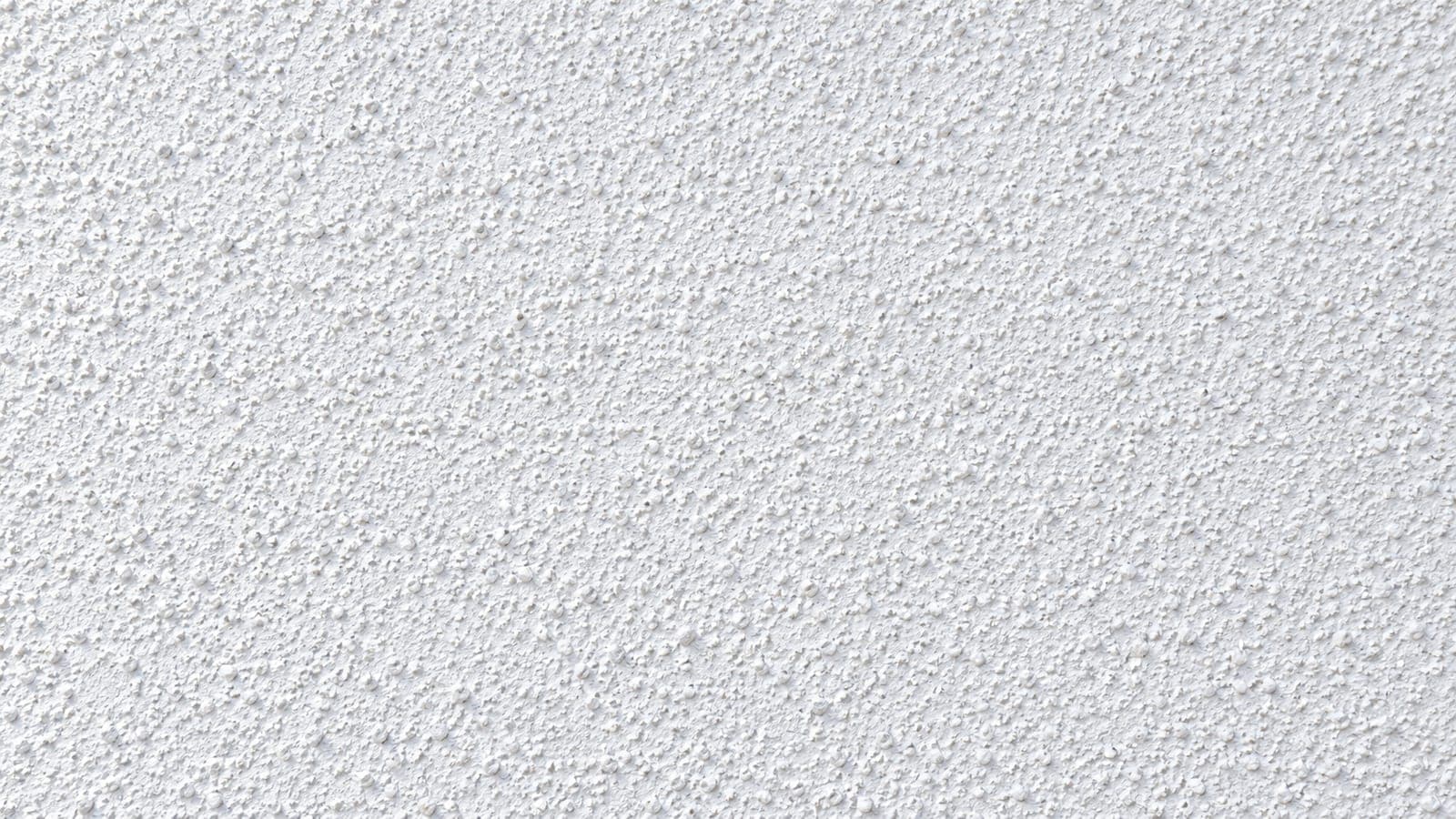
Textured
Decorative render with a fine or coarser grain, in the colour you choose. This is the usual finish on EPS: the texture is forgiving of small imperfections and shows dirt less quickly.
Smooth
Crisp and without grain. Looks the most modern, but shows every imperfection and every mark sooner. Needs a very flat surface and more maintenance.
Not sure which colour or texture suits your home? Get in touch for advice. We bring samples to the survey and look at them on your facade together.
How does facade insulation with EPS work?
We put a new, insulated shell around your home. Your wall stays in place and carries everything. Inside you do not lose a centimetre.
- Adhesive and surface. We test the wall for adhesion and flatness. Anything that is not firm has to go or be repaired first. Then we bond the boards.
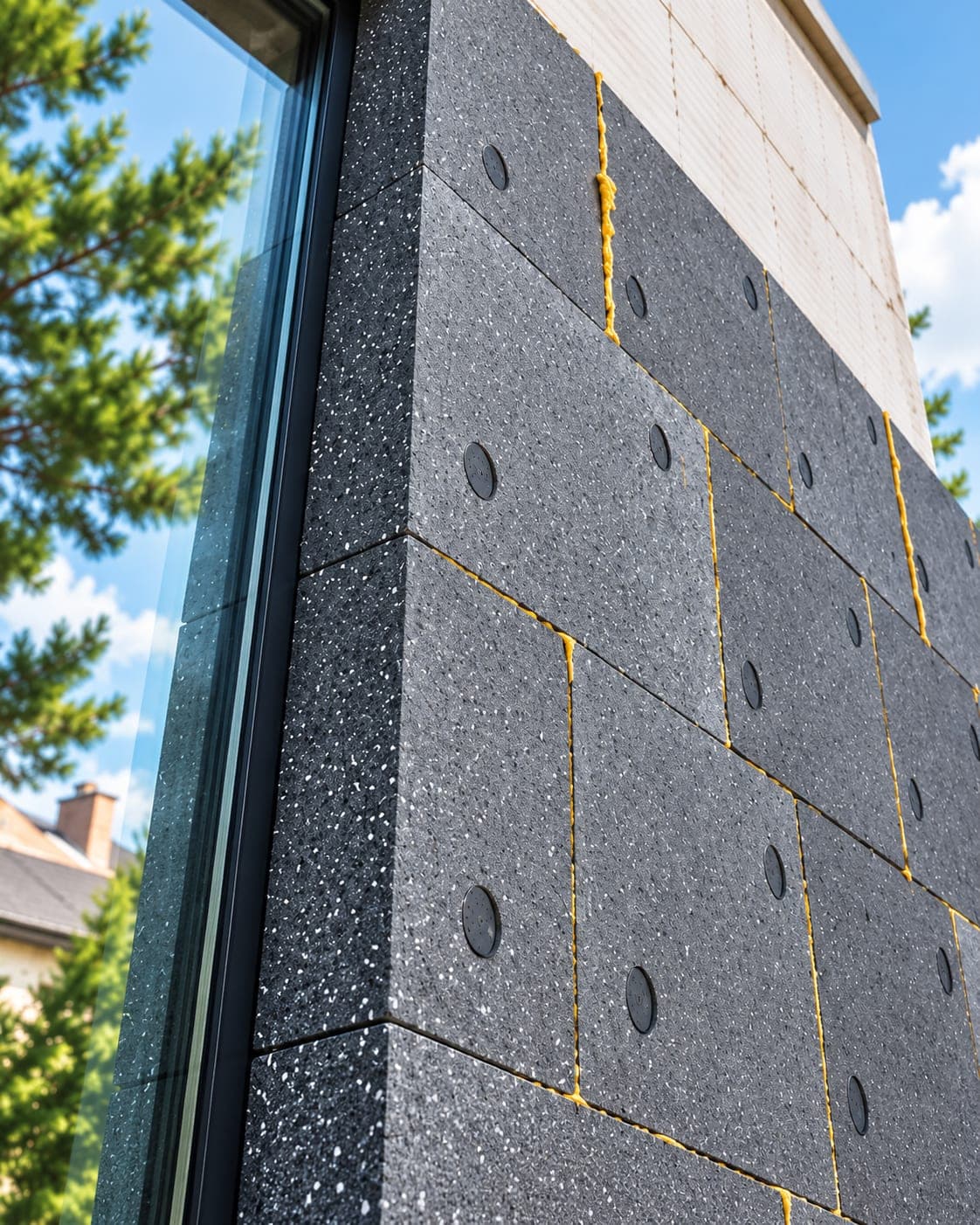
- EPS boards. Rigid polystyrene boards, laid in a staggered bond and anchored with fixings, with extra fixings at corners and on higher sections where wind suction is strongest. We fill the joints so no cold bridge remains.
- Reinforcement layer. Mortar with glass-fibre mesh against cracking, with extra profiles at corners and window frames.
- Finish coat. Decorative render or a smooth finish in your colour: water-repellent, but breathable.
You recognise graphite EPS by its grey colour. It insulates better than white EPS, so for the same insulation value the facade stays thinner.
Why EPS?
It insulates well per centimetre, absorbs hardly any water, is light and can be sanded flat. And the price per m² is favourable compared with other insulation materials.
How thick will the insulation be?
The thicker the boards, the better your home holds its heat. As standard we insulate thick enough for the Dutch national subsidy. If you want to go further, for a heat pump for example, a few extra centimetres will do it.
See thicknesses and insulation values
The insulation value (Rd, thermal resistance) shows how well the insulation layer holds back heat: the higher, the better. The Dutch ISDE subsidy requires at least Rd 3.5. The value of your whole facade is a little higher still, because your existing wall counts too. Allow for the insulation thickness plus 1.5 to 2 centimetres for adhesive, reinforcement and finish.
10 cm · Rd 3.1
Below the subsidy threshold. Only when there really is no room, for example with a narrow roof overhang or a facade right on the property boundary.
12 cm · Rd 3.75
Our standard: the thinnest option in this overview that puts you comfortably above the subsidy threshold.
14 cm · Rd 4.4
Noticeably more comfort. A good choice if you have or want a heat pump: it runs most efficiently in a home that holds its heat well.
16 cm · Rd 5.0
This brings your facade up to the level required for new-builds in the Netherlands. It is 4 centimetres thicker than the standard though, so we first check whether the roof edge and window frames allow it.
Indicative values for graphite EPS.
What difference will you notice?
Walls that no longer feel cold and a more even temperature in the house. What you save, we tell you during the survey.
What changes to your home, and where the craftsmanship lies
Your home becomes 13 to 18 centimetres thicker on every insulated side. Where the insulation stops and something else begins is where facade insulation most often goes wrong. That is where we focus our attention.
The surface
Adhesive does not bond to loose bricks, crumbling mortar joints or an old coat of paint. We test the wall beforehand for adhesion and flatness. Anything that is not firm is removed or repaired first.
Window frames and sills
The window frames stay in place and end up deeper in the facade. We finish the reveals as part of the job. A sill has to project well beyond the new facade, otherwise water runs behind it. We discuss new or extended sills with you, and we make a watertight junction between them and the facade.
The corners of windows
The greatest stress runs along the diagonal from the corner of a window. That is where we embed extra reinforcing mesh to prevent cracks.
The roof edge
The overhang has to be able to cover the new thickness. If that is too tight, we discuss what is needed during the survey.
The base of the facade
At the bottom the facade is hit by splashback from rain. A base rail keeps the insulation clear of the ground.
Vents and penetrations
Crawl-space vents, the boiler flue, lights: everything that passes through the facade keeps working. We seal around it so it stays watertight. If something needs extending, we agree that with you beforehand.
How it works
From your enquiry to a new facade
You request a quote
You fill in the quote form, with photos of your facades if you have them.
A price indication within 1 working day
By email, WhatsApp or phone, whichever you prefer.
Free survey and advice
Does the indication suit you? Then we'll come round to talk it through and advise you. We measure up, look at the window frames, roof edge and surface with you and tell you what your home needs.
Quote with a fixed price
Within 1 working day of the survey, with duration and starting week. Once you agree, we set the dates down in writing.
Insulating and finishing
Scaffolding, boards, reinforcement, finish coat. You can simply carry on living at home: all the work happens outside.
Handover together
We walk round the facade and record snags in a handover report.
Weather
Below 5 °C, in persistent rain or in strong sun on a wet layer we do not work on the facade: the layers then do not dry or bond properly. That is why the completion date is subject to the weather. If the schedule shifts, you'll hear straight away, with a new date.
What you arrange, what we do
What you arrange
- Make sure we can reach every facade: gates open, cars and belongings away from the facade and path.
- Cut back plants and ivy growing against the facade.
- Take down anything you do not want back on the new facade: window boxes, hooks, old signs.
- Make sure there is power and water.
- Discuss during the survey which changes to sills, vents and outdoor lights are needed. We include them in the schedule.
Can't manage something? Let us know beforehand and we'll include it in the quote.
What we do
- Putting up scaffolding and covering
- Testing and preparing the surface
- Fitting insulation, reinforcement and finish coat
- Advice on what needs doing around the facade: sills, downpipes, lights and vents, and the order of the work
- Watertight joints to window frames, sills and roof edge
- Invoice and photos for your subsidy application
- Final clean and taking our waste away
Guarantee
What if something is not right?
5-year guarantee
The insulation stays properly fixed, the finish coat keeps adhering, and no cracks appear that let water get behind the facade. If you report something, we respond within 2 working days. If it falls under the guarantee, we put it right free of charge.
What crisp means to us
Flat and even in texture when you look at the facade from about two metres away, in daylight. That is how the guarantee terms put it too. Small colour differences within the manufacturer's tolerances and fading from the sun are part of exterior work.
Why Kraft
Insulating and rendering from one company
No insulation firm and plasterer blaming each other.
One dedicated team
Our own crew and one point of contact, from the first board to handover.
20+ years' experience
In finishing work.
New-build project?
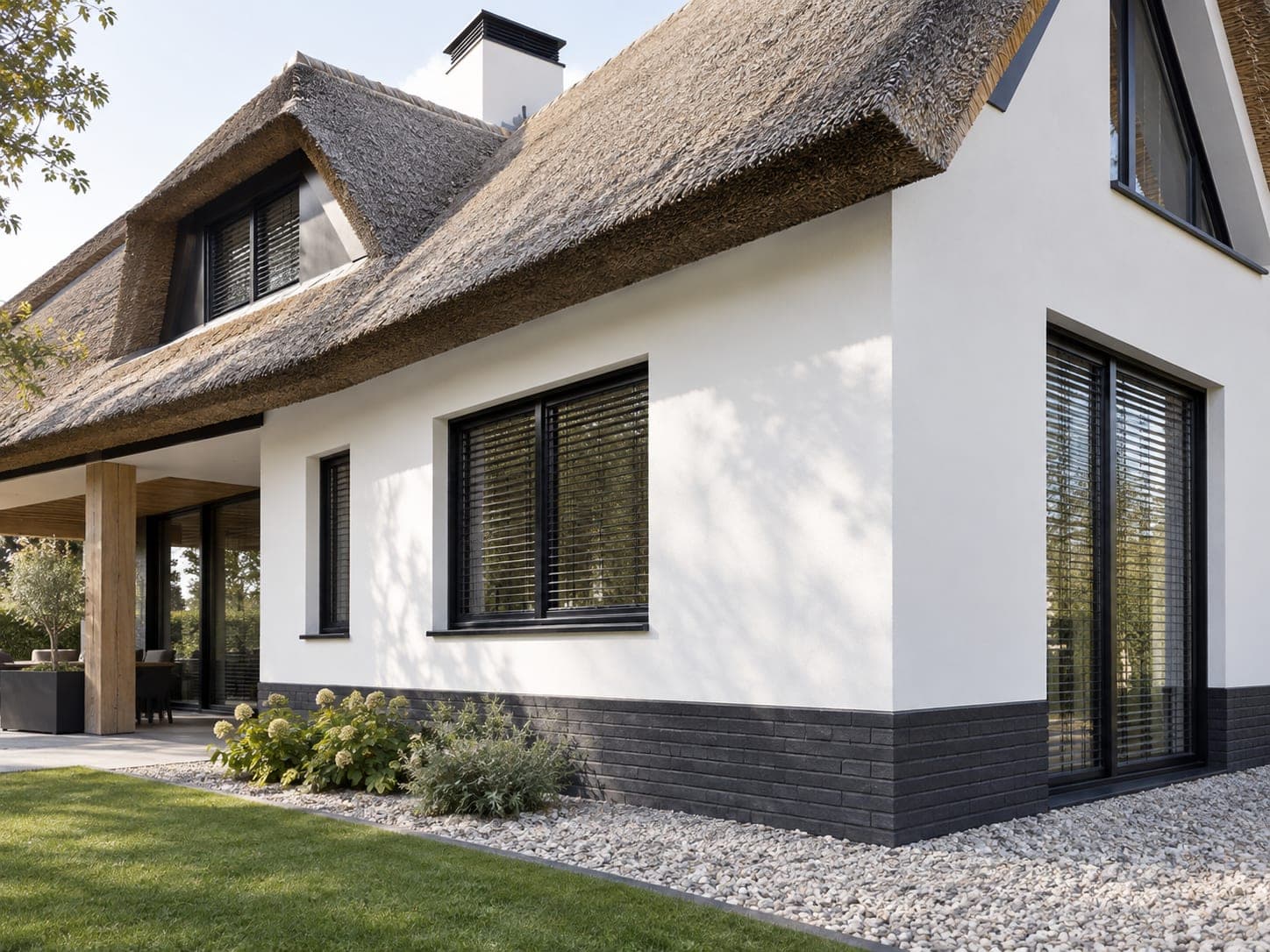
A crisp, jointless facade in almost any colour and texture: there is usually facade insulation with render behind it. We apply it to calcium silicate, concrete or timber frame, with a system that suits that substrate.
Involve us at the design stage
Not only once the walls are up. The facade drives choices made earlier in the process: how deep the window frames sit in the facade, how far the roof has to overhang, how the plinth meets the ground and where the downpipes run. If those details are aligned in advance, everything joins up neatly, without cold bridges and without changes afterwards.
At least Rc 4.7 (Netherlands)
In the Netherlands a new-build facade has to reach at least Rc 4.7. We match the insulation thickness to your adviser's energy calculation and fit our work into the construction schedule.
Good to know
New-builds in the Netherlands do not qualify for the ISDE subsidy, and VAT is 21%. The facade falls under the permit or notification for your new home.
For businesses
You build. We finish it.
Facade insulation on homes, housing blocks and commercial buildings for contractors, housing associations and property owners, to specification and schedule. Our own dedicated team with 20+ years' experience, one point of contact and VCA-certified.
Frequently asked questions
What people ask us
What does facade insulation cost?
That depends on the m² of facade, the insulation thickness and the number of window frames and corners. Request a quote and you have a price indication within 1 working day.
More about the costsCan I get a subsidy?
For homes in the Netherlands, yes, if you own it, live in it yourself and it was built before 2019. Through the Dutch ISDE scheme you get €20.25 per m², or double that if you take a second measure within 24 months. We make sure you have everything you need for the application. Homes outside the Netherlands fall under their own schemes, which we cannot apply for.
More about the subsidyDo I need a permit?
That depends on your municipality and your home. Check with your municipality before you commission the work. Stricter rules apply to a listed building or in a protected townscape. We cannot assess the permit for you, but we're happy to advise on how the work is carried out, so get in touch.
Facade insulation or cavity wall insulation?
If your cavity is still empty and the facade is sound, cavity wall insulation is cheaper and quick to do. External insulation can be as thick as needed and reaches a much higher insulation value. It is the answer when you have no cavity, the cavity is already filled or the facade needs work anyway.
What is EPS exactly?
Expanded polystyrene, often just called polystyrene. For facades we use rigid, dimensionally stable boards made specifically for external wall insulation. Graphite EPS is the grey variant that insulates a little better still.
Is EPS on a facade fire-safe?
Loose EPS boards are combustible, but on the facade they are fully encased in reinforcement and render. A complete system with EPS usually reaches fire class B: low flammability. For taller buildings, or where the fire risk is higher, we recommend strips of stone wool above the window frames. We fit those where needed.
Can I have my facade in anthracite or black?
Not with every render. Very dark colours get so hot in the sun that the finish coat can crack. There are adapted systems for dark shades. During the survey we say what is possible.
How long does facade insulation last, and will I get green algae?
A well-installed system lasts for decades. On the north and shaded sides green algae can appear after a few years, because the outer layer cools down at night and moisture settles on it. During the survey we'll tell you which facades are more prone to it. Keep plants a little away from the facade, have algae cleaned off gently in good time, never with a pressure washer, and repair damage quickly.
My wall is damp. Can I still insulate?
If rain drives through the facade, external insulation usually solves it. If the damp comes from a leaking gutter or from the ground below, that cause has to go first. Otherwise you lock the damp into the wall.
What happens to my crawl-space vents?
They have to stay open, even after insulation. We seal around them so they stay watertight. If they need extending, we agree beforehand who does it and when.
There is a lot to it. We set it out for you.
Permit, subsidy, the order of the work: we go through what matters for your home. Request a quote with photos of your facades and you have a price indication within 1 working day.
Or call us directly: +31 6 16 20 77 59
Also of interest
Related services
- Plastering →
Plastering for walls, ceilings and facades. Paint-ready, wallpaper-ready or decorative, inside and out.
- Painting →
Interior and exterior painting for walls, ceilings, window frames and doors.